
Let me tell you something that happened at a client meeting a couple of years ago that I still think about.
I walked into a corporate office in the middle of a busy city — grey carpet, white walls, fluorescent tube lights humming overhead, zero windows in sight. The kind of place where the air feels slightly recycled and the plants, if there were any, would almost certainly be plastic. The HR head greeted me with a tired smile and said, almost apologetically, “We just can’t figure out why our team seems so drained all the time.”
I looked around and thought: I can tell you exactly why.
That meeting is what eventually led me to make biophilic interior design — nature inspired interior design — the cornerstone of Interiorly’s commercial projects. And honestly? It’s one of the best professional decisions I’ve ever made.
Why Biophilic Interior Design Is Transforming Modern Offices
Somewhere along the way, the modern office became synonymous with sterility. Clean lines, neutral palettes, maximum function, minimum soul. We designed for efficiency and forgot to design for humans, something many commercial interior designers are now rethinking. And then we wondered why people were burnt out, disengaged, and counting down the minutes to 6 PM.
The data is hard to ignore now. Global employee engagement fell to just 20% in 2025 — its lowest level since 2020 — costing the world economy an estimated $10 trillion in lost productivity, according to Gallup’s State of the Global Workplace 2026 Report.
Ten trillion dollars. Let that sink in for a moment.
We keep looking for the answer in performance management tools and leadership workshops. But what if a significant part of the answer is literally sitting in the soil of a potted plant, something deeply rooted in nature inspired interior design?
What Biophilic Interior Design Actually Is (And isn’t)
I want to clear something up, because I hear this often: biophilic design is not just “putting some plants in the corner and calling it a day.” It is a design philosophy rooted in our innate human need to connect with nature — and when done well, it becomes a core principle of biophilic office design and even biophilic architecture.
The global market for biophilic design is projected to reach $3.14 billion by 2028, growing at a compound annual rate of over 10%. This is not a trend driven by aesthetics alone — it is being propelled by science, data, and demand from businesses looking for better interior design for commercial spaces.
In fact, 60% of interior design experts agree that bringing nature into design will be the top trend in 2025 — and that’s across residential and commercial spaces alike. In the corporate world specifically, the shift has been seismic.
The Science Behind the Serenity
Here’s the part I genuinely love sharing with clients, because it tends to settle the debate immediately.
Research suggests that productivity can increase by 6%, and creativity can be boosted by up to 15% in nature-inspired work environments, a core benefit of biophilic interior design. For a business with 50 employees, a 6% productivity gain is the equivalent of hiring three additional people — without the recruitment cost. That’s the kind of ROI that you’ll get after onboarding the best office interior design company.
Over 80% of people surveyed believe biophilic interior design improves their mental health and overall wellbeing — with these environments helping reduce stress, boost concentration, and increase productivity, especially in office settings.
And then there’s an absenteeism angle, which often surprises clients. Employees working in spaces with natural elements tend to have lower absenteeism rates, highlighting how biophilic design in offices supports psychological health. When people feel good in space, they show up — physically and mentally.
What I’ve Seen on the Ground
Across the projects we’ve done at Interiorly — from startup studios in Delhi to corporate floors in Mumbai — I’ve watched the transformation happen in real time, especially through biophilic office interior design ideas.
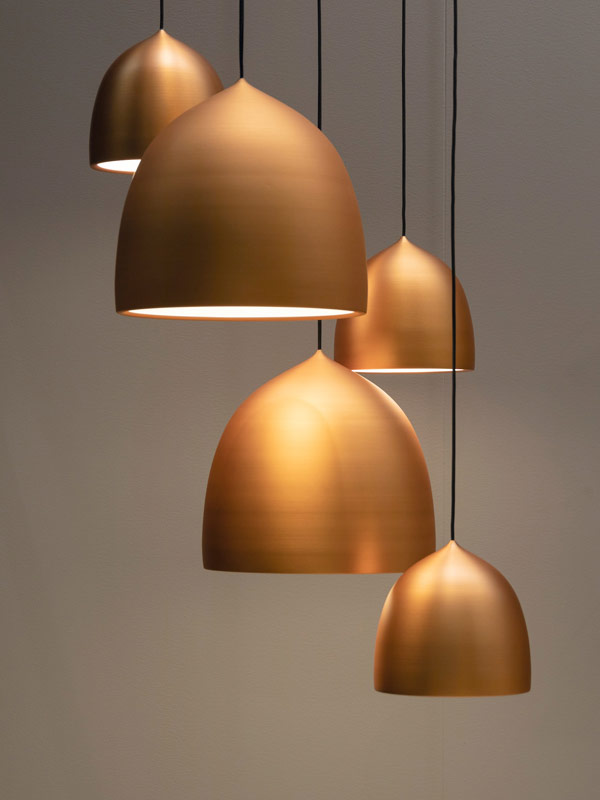
One fintech client came to us with a particularly clinical brief: “We want it to look premium.” What they got was premium and warm — warm-toned reclaimed wood cladding on the feature wall, a living moss installation behind the reception, soft pendant lighting with linen shades instead of cold overhead panels, and clusters of low-maintenance indoor plants at workstations aligned with biophilic office design principles.
Within three months, their team leader was reporting that collaborative energy in the office had shifted noticeably. One of the co-founders sent me a message that said: “People are actually staying back to work. Nobody did that before.”
That is the power of biophilic interior design in action.
The Elements That Do the Heavy Lifting
Not every space has the budget for a full living wall (though if you do, please call me). But the beauty of biophilic interior design is that it works at every budget and every scale.
Here’s what we prioritise at Interiorly:
Natural light — always first.
Before I look at anything else in a new office project, I look at the light. Maximising daylight through large windows or skylights is one of the most impactful interventions in modern interior design for commercial spaces. If a layout is blocking natural light, we will restructure it.
Material honesty.
Wood, stone, bamboo, woven textures, the use of sustainable materials like reclaimed wood and bamboo is increasing as a way to promote eco-friendly interiors that genuinely feel connected to nature. These are thoughtfully used by commercial interior decorators, not because they look pretty — it regulates acoustics, adds warmth, and age beautifully.
Strategic greenery.
In 2026, Modern offices now embrace greenery as a core of biophilic office design. You don’t need a botanical garden. You need the right plants, in the right places, chosen for the light conditions of your specific space.
Colour grounding.
Warm neutrals and dark, earthy green tone aligns with nature inspired interior design. I use these as anchors — forest greens, warm terracottas, ochres and taupes — and layer in natural textures to build depth.
A Note on the Return-to-Office Moment
We are living through a fascinating tension right now. Companies want people back in the office, but employees have spent the last few years working from homes they’ve made beautiful and comfortable. Major companies are now looking for biophilic office interior design ideas to create spaces that people actually want to return to.
The insight is simple: if you want people to choose the office over their home, the office has to feel as good as — or better than — their home. Nature-inspired design is one of the most reliable ways to achieve that.
Giveaways: Tips from the Studio
Before I wrap up, here are a few trade secrets I genuinely love sharing — the small interventions that punch well above their weight:
- The 30-60-10 plant rule.
In any room, I use three sizes of plants — 30% tall statement plants (think fiddle leaf fig or a large peace lily), 60% mid-height clustered plants at desk or shelf level, and 10% trailing or hanging plants for visual movement. This layering creates the feeling of a lush, living space without overwhelming it. - Warm your artificial light.
If you can’t bring in more natural light, the next best thing is swapping cool-white fluorescent panels for warm-toned LEDs (2700K–3000K). The difference in how a room feels is instant and dramatic. - One raw material, done well.
ou don’t need to use every natural material at once. Pick one — a raw stone surface, an exposed timber beam, a cane pendant light — and let it be the anchor. Restraint in biophilic design is always more elegant than excess. - Don’t forget scent.
Nature-inspired design engages all the senses. A subtle diffuser with eucalyptus or sandalwood in a meeting room does more for the atmosphere than most people expect. It’s one of the most underused tools in commercial interiors. - Paint a ceiling.
Experts identified painting ceilings as an emerging trend in 2025-26 — a sky blue or soft sage ceiling in an office instantly adds height and a sense of the outdoors, even in a windowless room.
These small changes can transform your boring office design into a biophilic office design and that too on a budget.
The Bottom Line
We spend roughly a third of our lives at work. The spaces we design for work are not neutral — they are either working for us or against us. A sterile, disconnected office does not just feel bad; it costs real money in disengagement, attrition, and lost creativity.
Nature-inspired interior design is not a luxury anymore. It is a business decision.
At Interiorly, this is the work that excites me the most — taking a space that has forgotten it belongs to living, breathing human beings, and giving it back its soul. One living wall, one warm timber surface, one shaft of afternoon sunlight at a time.
If your office still looks like a waiting room, it might be time to have a conversation with an experienced commercial interior designer.
Deeksha is an Interior Designer and the Founder of Interiorly, a design studio specialising in nature-forward commercial and residential interiors. She writes about design, wellbeing, and the spaces we deserve to inhabit.
FAQs
Why is biophilic design crucial in the workspace?
Biophilic design improves employee wellbeing, reduces stress, and increases productivity by connecting workspaces with natural elements.
Is biophilic design possible on a budget?
Yes, biophilic design can be achieved on a budget using indoor plants, natural light, and affordable organic materials.
Why is biophilic design important in architecture?
Biophilic design in architecture enhances human health, sustainability, and overall space functionality by integrating nature into built environments.
How can biophilic interior design improve employee productivity in offices?
Biophilic interior design boosts productivity by enhancing focus, creativity, and mental wellbeing through natural elements in office spaces.
What are the best biophilic office interior design ideas for small workspaces?
The best biophilic office interior design ideas for small workspaces include vertical greenery, natural lighting, and space-saving plant arrangements.